Case study • Internal employee tool
Wire Transfer Employee App
Transforming TD Bank’s aging Lotus Notes wire-origination system into a modern, role-based application for branch employees across six operational roles.
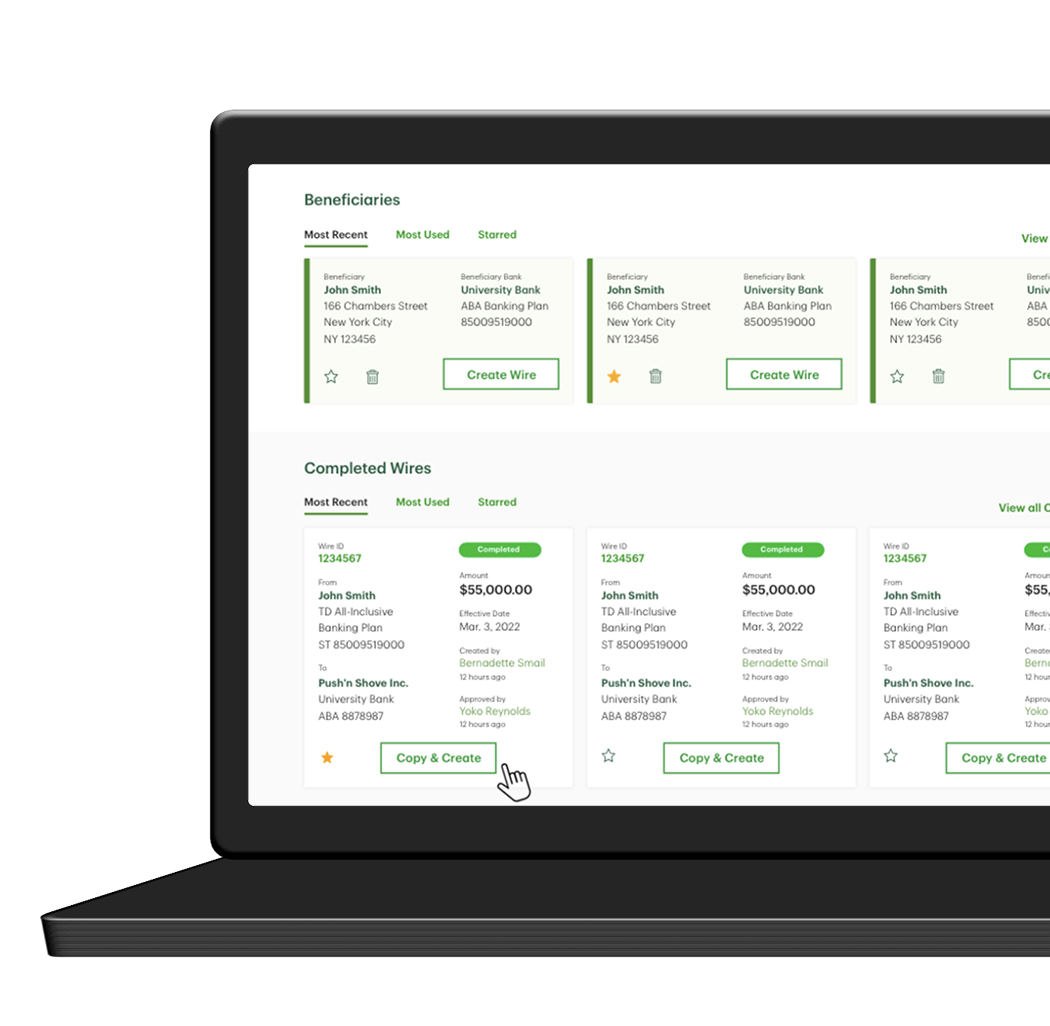
Transforming TD Bank’s aging Lotus Notes wire-origination system into a modern, role-based application for branch employees across six operational roles.
TD’s US branches originated wires on an aging Lotus Notes system built around templates and manual re-entry — a slow, error-prone workflow that also had to serve six very different operational roles.
UX/UI Lead. I owned the service blueprint, information architecture, user-entitlements model, and design direction, and coached the UX team through research, testing, and delivery.
A modern standalone application designed around six operational roles: 70+ screens delivered and tested with 40+ users, for a network of 15,000+ US retail locations.
Across TD’s 15,000+ US retail locations, branch employees originated customer wire transfers on a legacy Lotus Notes “Wire Origination Tool.” TD wanted to retire it and stand up a modern, standalone application with a seamless, user-centred experience, without losing the operational rigour a regulated wire process demands.
I led the engagement as UX/UI Lead, co-creating the modernization with a multi-disciplinary group of stakeholders, balancing business rules and integration technology against the user experience, and holding the work to the TD design system and accessibility standards. Beyond design, I owned project planning, reporting, and stakeholder communication.
Three findings from discovery became the pillars every design decision was measured against.
Customer information is pre-populated — no more manual entry.
No more “template” concept. Beneficiaries are saved, managed, and easy to find.
Copy & create from completed wires, so repeat work is fast.
As the lead, the strategic artifacts were mine to own; execution I shared with, and coached, the UX design team.
We developed a deep understanding of the current system, interviewed stakeholders across roles to capture their workflow and pain points, built an interactive click-through prototype, and tested it with key users to iterate. Three findings shaped everything that followed.
1. It was never one tool for one user, it was six roles
Mapping the work surfaced six distinct operational roles, each touching a wire differently. That reframed the project from “rebuild the wire screens” to “design a role-based system with an explicit entitlements model.”
2. Templates and manual entry were the biggest source of error
Building each wire from a template and re-keying customer information by hand was slow and mistake-prone, exactly the wrong risk profile for moving money.
3. Staff rebuilt near-identical wires from scratch
Much of the daily work was repetition the tool didn’t recognize, forcing people to recreate wires they had effectively already made.
Creates wires for customers
Reviews and approves wires
Monitors and oversees store wires
Handles failed and returned wires
Monitors and exports wire activity
Manages roles, entitlements, and config
The turning point came in discovery: there were more operational roles than expected — six — and they were genuinely different from one another. A wire wasn’t one job done one way; it was six jobs, each with its own tasks and its own level of access.
So before designing any screens, I mapped the whole application end to end as a journey map, the only way to see the holistic picture across every role at once. That shared map is what let us tailor the interface and the access model role by role, rather than fit six different jobs into a single generic experience.
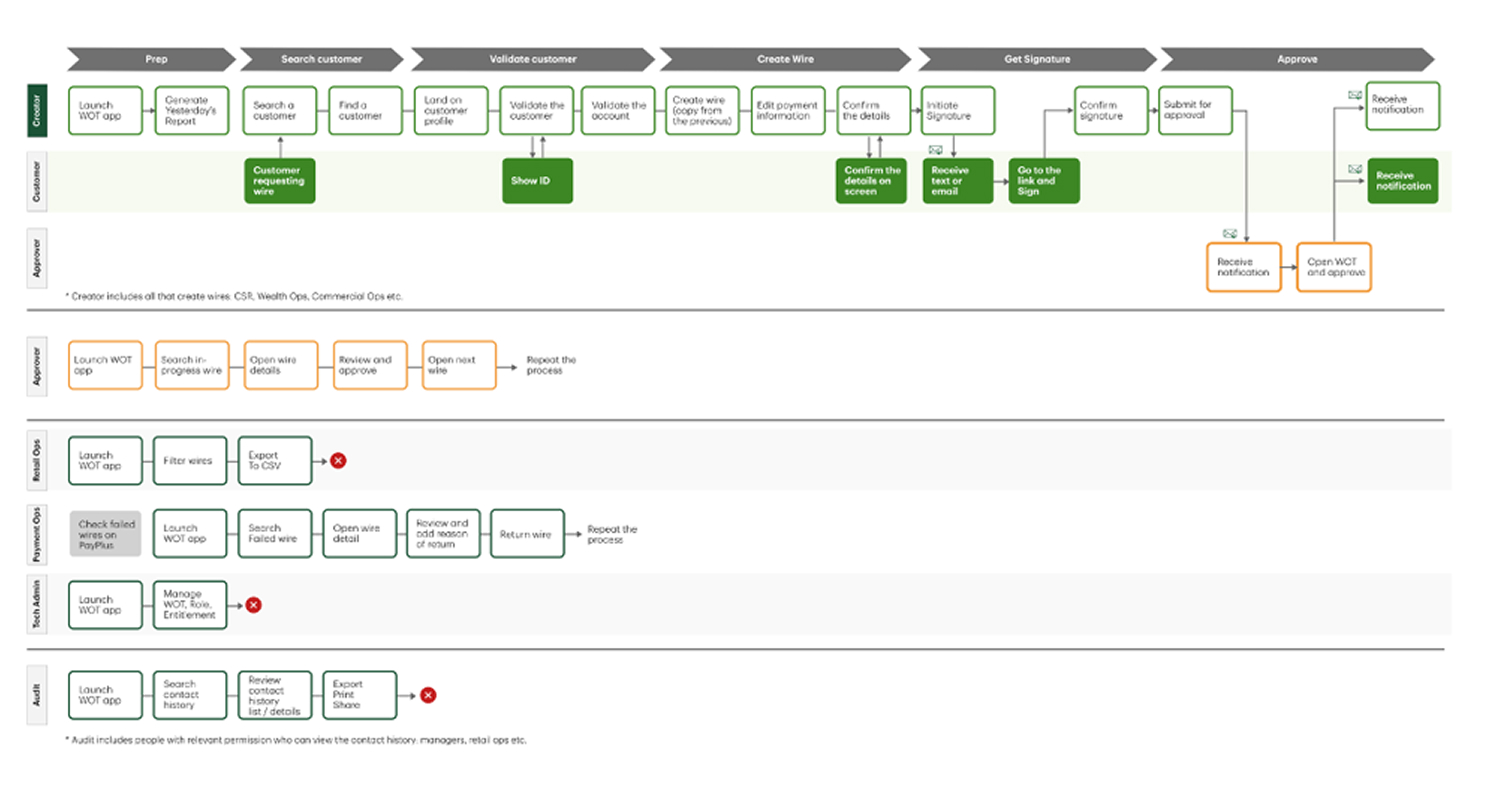
That end-to-end map — a service blueprint spanning every role and every step — together with story-telling journey mapping, quickly became more than a working tool. They were circulated across TD business lines, and I was invited to present the customer journey in leadership meetings, building a consistent understanding of the experience through the lens of users.
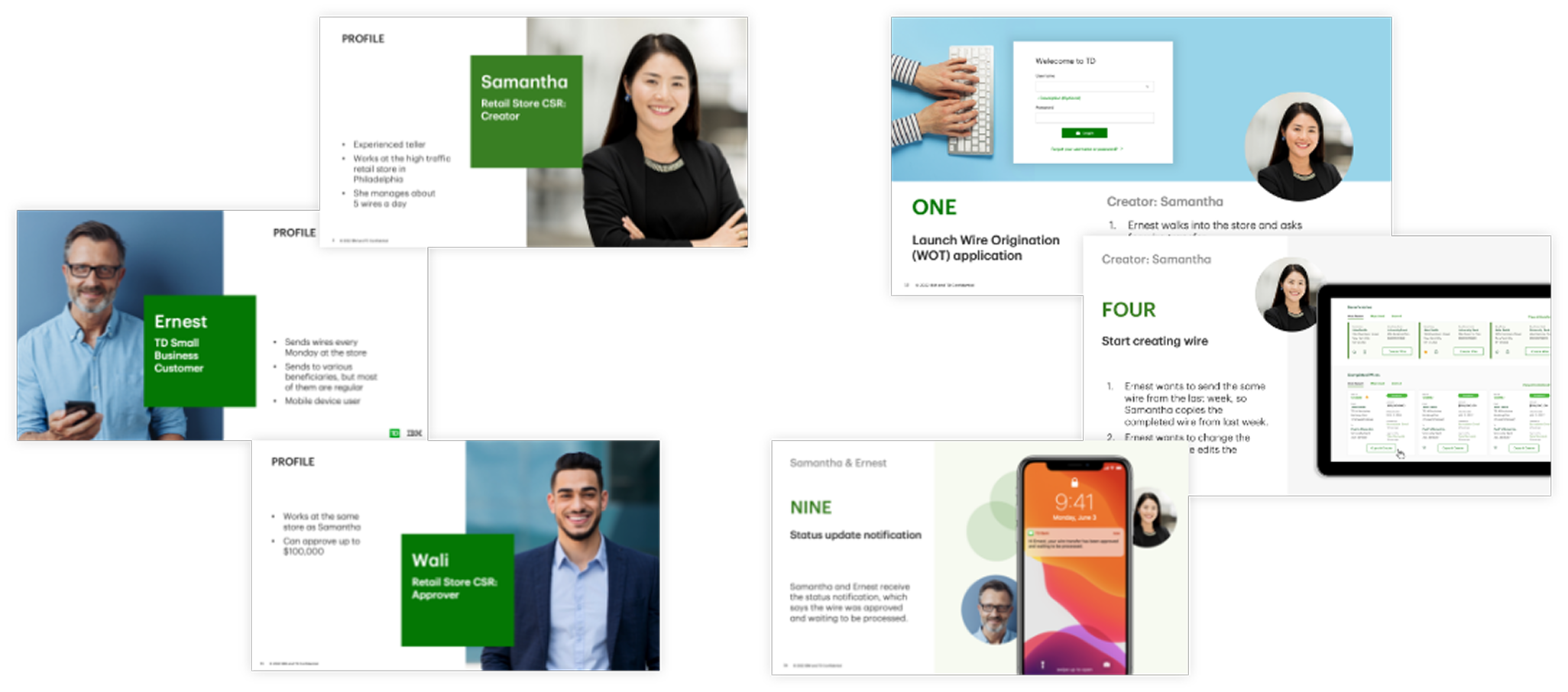
Over the 5-month engagement, we delivered more than 70 UI screens and tested with over 40 users. It became a modern, role-based application to replace the legacy system across TD’s US retail network. The service blueprint outlived the project as a shared artifact, carried into leadership conversations across the bank’s business lines.
Open to conversations about design leadership, product strategy, and human-centred design.
Contact me